Mahashivratri Vrat Katha: The Hunter's Story & 3 Golden Rules of Shiva Puja

Key Takeaway

What is the Story of Mahashivratri?
According to Shiva Purana, a hunter named Chitrabhanu got trapped in a forest on Shivratri night. He climbed a Bel tree for safety. While waiting for prey, he unknowingly dropped Bel leaves and water onto a Shivling below throughout the four watches (Prahars) of the night.
тАв The Result: His fasting (due to hunger) and worship (unknowing) pleased Lord Shiva, who granted him Moksha.
тАв Key Rule: When doing Parikrama, never cross the Jaldhari (drain); turn back from there.
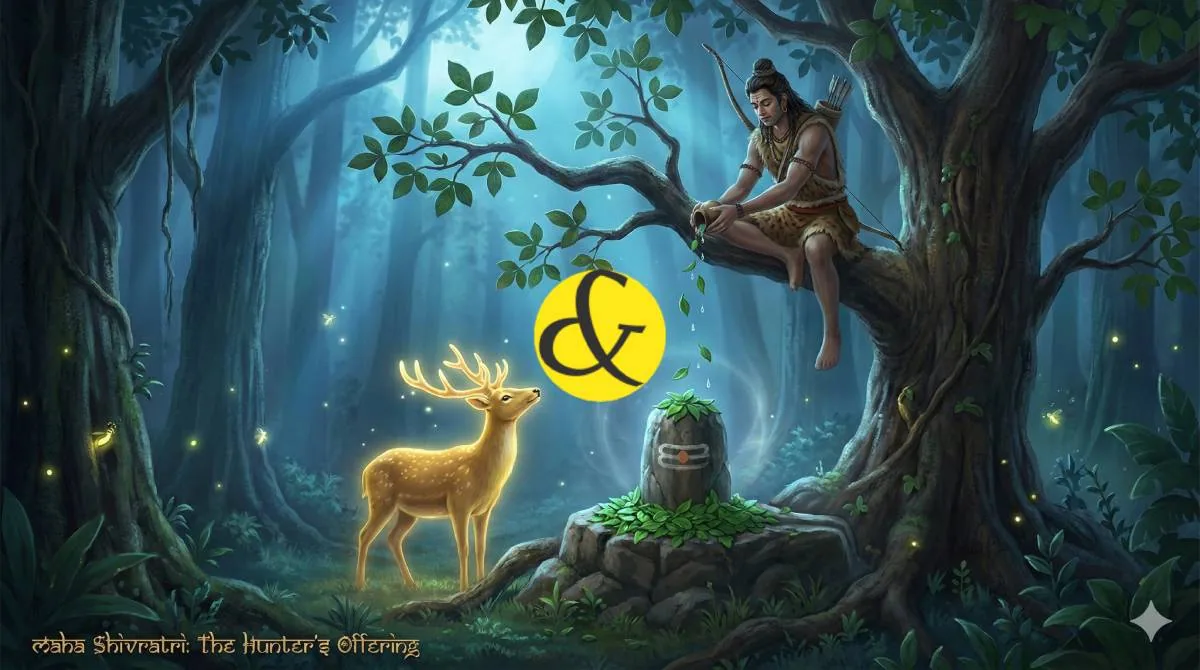
Hunter Chitrabhanu on a Bel tree offering leaves to Shivling on Mahashivratri.

ЁЯУЬ Mahashivratri Vrat Katha

The Legend of Hunter Chitrabhanu
ЁЯП╣ The Hunter & The Night of Shiva
1. The Unknowing Worship (Anjane Mein Puja)

A hunter named Chitrabhanu was trapped in a forest at night. To stay safe from wild animals, he climbed a **Bel (Bilva)** tree. To pass the time and stay awake, he plucked leaves and dropped them down. Unknown to him, there was a **Shivling** at the base of the tree.

2. The Fast (Hunger & Thirst)

He had been starving all day. His sweat (symbolizing water offering) and the Bel leaves fell on the Shivling. Without knowing, he performed the **Abhishek** of Lord Shiva on the holy night.

3. The Test of Compassion (Daya Bhav)

During the four watches (Prahars) of the night, three does (female deer) and one buck came to drink water. The hunter aimed his arrow, but each deer pleaded for mercy, promising to return. Hearing their plight, the hunter's heart melted (Transformation), and he spared them.

4. Salvation (Moksha)

By morning, the hunter had fasted, kept a vigil (Jagran), offered Belpatra, and shown non-violence (Ahimsa). Lord Shiva was so pleased by this transformation that He appeared and granted the hunter **Moksha (Salvation)**.

"If worship performed unknowingly yields such great results, imagine the infinite fruit of worshipping Shiva with full devotion and rituals."
рд╕реАрдЦ: рдпрджрд┐ рдЕрдирдЬрд╛рдиреЗ рдореЗрдВ рдХреА рдЧрдИ рдкреВрдЬрд╛ рдХрд╛ рдЗрддрдирд╛ рдлрд▓ рд╣реИ, рддреЛ рдкреВрд░реА рд╢реНрд░рджреНрдзрд╛ рдФрд░ рд╡рд┐рдзрд┐-рд╡рд┐рдзрд╛рди рд╕реЗ рдХрд┐рдП рдЧрдП рдкрд╛рд░реНрдерд┐рд╡ рдкреВрдЬрди рдХрд╛ рдлрд▓ рдХрд┐рддрдирд╛ рдЕрдирдВрдд рд╣реЛрдЧрд╛ред
тЪая╕П 3 Golden Rules for Shiva Puja
ЁЯНГ The Belpatra Rule

Always offer the Belpatra such that the **smooth side** touches the Shivling. The leaf should not be torn.

рд╣рдореЗрд╢рд╛ рдзреНрдпрд╛рди рд░рдЦреЗрдВ рдХрд┐ рдмреЗрд▓рдкрддреНрд░ рдХрд╛ рдЪрд┐рдХрдирд╛ рд╣рд┐рд╕реНрд╕рд╛ рд╢рд┐рд╡рд▓рд┐рдВрдЧ рдХреА рддрд░рдл рд╣реЛред
ЁЯНЪ The Akshat Rule

Rice grains (Akshat) offered to Shiva must be **whole and unbroken**. Broken rice is considered incomplete.

рдЪрдврд╝рд╛рдпрд╛ рдЬрд╛рдиреЗ рд╡рд╛рд▓рд╛ рдЪрд╛рд╡рд▓ рдЯреВрдЯрд╛ рд╣реБрдЖ рдирд╣реАрдВ рд╣реЛрдирд╛ рдЪрд╛рд╣рд┐рдПред
ЁЯФД The Parikrama Rule

Never perform a full circle. Perform **Half-Parikrama**. Stop at the **Jaldhari** (Water outlet) and turn back. Do NOT cross the drain.

рд╢рд┐рд╡рд▓рд┐рдВрдЧ рдХреА рдкрд░рд┐рдХреНрд░рдорд╛ рд╣рдореЗрд╢рд╛ рдЖрдзреА рдХреА рдЬрд╛рддреА рд╣реИред рдЬрд▓рдзрд╛рд░реА рдХреЛ рд▓рд╛рдВрдШрдирд╛ рдирд╣реАрдВ рдЪрд╛рд╣рд┐рдПред

Frequently Asked Questions

Why is the hunter's story recited on Mahashivratri?
The story of Hunter Chitrabhanu illustrates the immense mercy of Lord Shiva ("Bholenath"). It teaches that Shiva looks at the devotion and transformation of the heart (Bhav) rather than just rituals. Even accidental worship, if accompanied by a change of heart (Compassion/Ahimsa), grants Moksha.
What is the correct way to perform Shivling Parikrama?
You must perform only Half-Parikrama (Ardha Pradakshina). Start from the left, go around until you reach the Jaldhari (the outlet where water flows out), stop there, and turn back. Never cross the Jaldhari, as it represents the energy of Mother Shakti, which is too potent to be stepped over.
Can we offer Belpatra with stripes or spots?
Ideally, Belpatra should be clean, green, and without holes or spots (Vajra). It should have three leaves attached to a single stem. Ensure the smooth side faces the Shivling while offering.
What if I don't have a Shivling at home?
You can make a Parthiv Shivling using pure mud/clay or even kneaded flour for the puja. After the puja is over, you can immerse (Visarjan) it in a water body or a clean pot.
Why must rice (Akshat) be unbroken?
"Akshat" literally means "That which is not broken." Offering broken rice indicates incompleteness or a broken vow. Whole rice grains symbolize abundance, wholeness, and the devotee's complete surrender to Lord Shiva.

Book Your Personal Consultation

Fill out the form below to connect with our expert astrologers. Your information is 100% confidential.