Vedic astrology consultations, readings and remedies

Veer Savarkar Biography: History, Ideology & Contributions (वीर सावरकर)
 AstroAnanta Team3 Min Read5,963
Key Takeaway
Vinayak Damodar Savarkar, popularly known as Veer Savarkar, was a prominent Indian freedom fighter, social reformer, and politician born on May 28, 1883, in Nashik. He founded secret societies like Abhinav Bharat and Mitra Mela to fight British rule. He was sentenced to 50 years of 'Kala Pani' in the Cellular Jail for his revolutionary actions. Later, he served as the president of the Hindu Mahasabha, actively campaigned against untouchability, and promoted rationalism until his death on February 26, 1966.
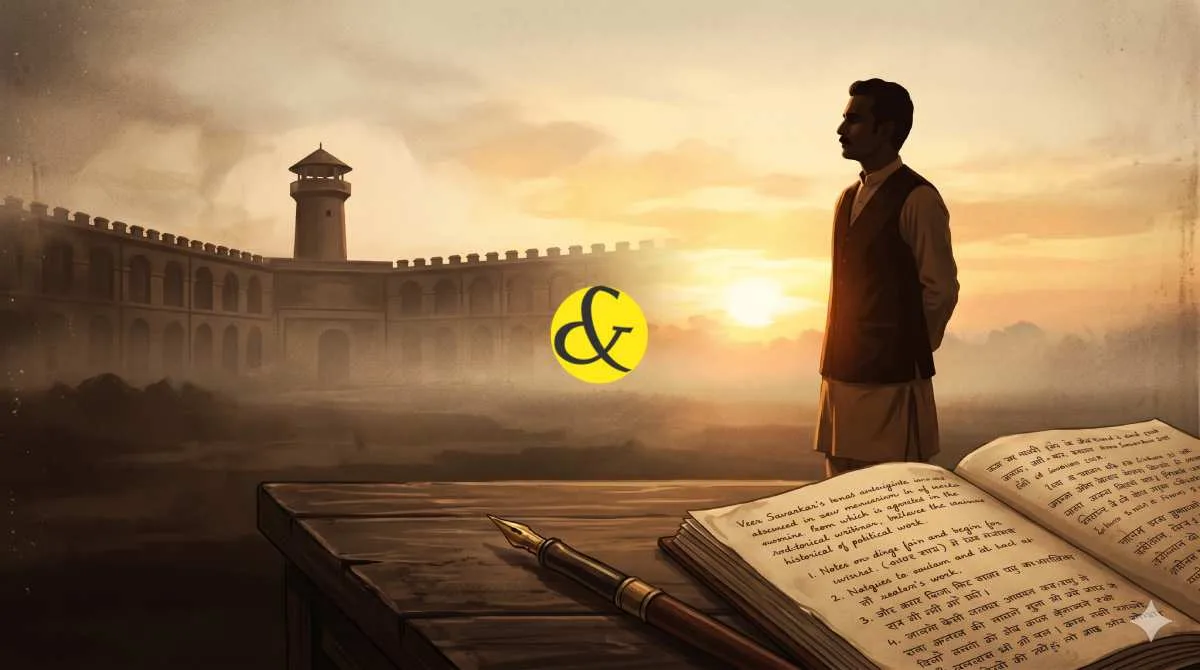
वीर सावरकर (Veer Savarkar) was born on May 28, 1883, in Nashik, Maharashtra, into a Hindu Marathi family. Known for his exceptional bravery since childhood, he rightfully earned the title 'Veer' (brave). Deeply influenced by his elder brother, Ganesh Savarkar, he grew up to become a renowned politician, social reformer, and a fierce freedom fighter who formulated the Hindutva ideology.
⚔️ स्वतंत्रता संग्राम में योगदान (Role in the Freedom Struggle)
गुप्त संस्थाओं की स्थापना
Along with his brother Ganesh Damodar Savarkar, he founded a secret revolutionary society called Abhinav Bharat Society (अभिनव भारत सोसाइटी) in 1904. During his youth, he also established Mitra Mela (मित्र मेला), a youth organization aimed at fostering nationalistic and revolutionary ideas. He was also closely associated with the Free India Society and India House.
स्वदेशी आंदोलन (Swadeshi Movement)
Veer Savarkar was a strong proponent of the Swadeshi concept and strictly opposed foreign goods. In 1905, on the auspicious day of Dussehra, he took the bold step of organizing a bonfire to burn all foreign clothes and goods, sending a strong message of self-reliance.
⛓️ काला पानी और साहित्यिक योगदान (Kala Pani & Literature)
Due to his armed rebellion against the British government and his conspiracy against the Morley-Minto reforms, Savarkar was arrested in 1909. In 1911, he was sentenced to two consecutive life terms—meaning 50 years of rigorous imprisonment in the Cellular Jail of the Andaman and Nicobar Islands, famously known as Kala Pani (काला पानी).
During his brutal imprisonment, his intellectual spirit remained unbroken. He wrote the famous book "The Indian War of Independence 1857" (भारतीय स्वतंत्रता संग्राम का इतिहास), which detailed the guerrilla warfare tactics used during the Sepoy Mutiny. He was eventually released in 1924 under strict conditions prohibiting him from participating in political activities for five years.
🕊️ समाज सुधार और विचारधारा (Social Reforms & Ideology)
- हिंदू महासभा के अध्यक्ष: A towering nationalist figure, Savarkar served as the President of the Hindu Mahasabha for over seven years, strongly advocating the concept of a Hindu Rashtra (Hindu Nation) prior to India's independence.
- अस्पृश्यता का विरोध (Fight Against Untouchability): He launched one of the most powerful social reform campaigns against untouchability in India. He built the Patit Pavan Temple in Ratnagiri, ensuring that all Hindus, including those from the Dalit community, had the right to enter and pray.
- तर्कवाद और नास्तिकता (Rationalism): He strongly supported rationalism and actively disliked orthodox, superstitious Hindu traditions, even dismissing the religious worship of cows as a superstition.
- भारत छोड़ो आंदोलन: It is also a historical fact that Veer Savarkar politically opposed the famous Quit India Movement of 1942.
Frequently Asked Questions
Shardiya Navratri 2026: कलश स्थापना मुहूर्त 11:50–12:37 व गज वाहन का शुभ संयोग
Read Now →
Why Your Kundli on AstroAnanta Is Different — Built on Real Calculations, Not Guesswork
Read Now →
Education and Astrology: Predicting Studies via the 5th House (शिक्षा और कुंडली का पंचम भाव)
Read Now →