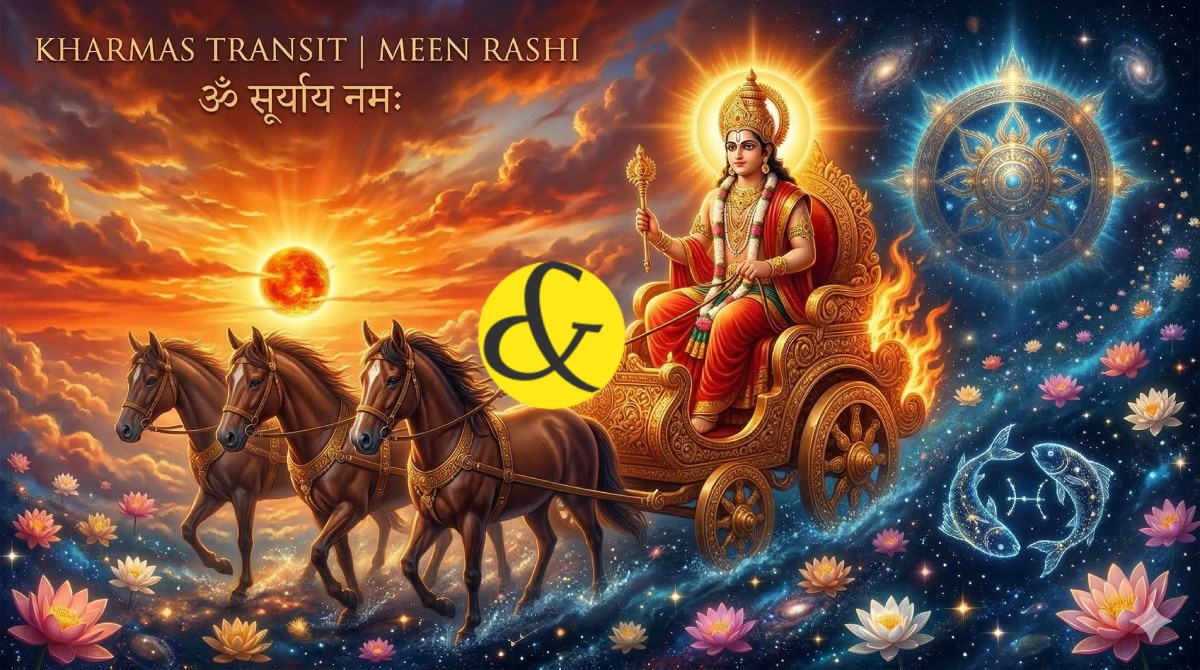
Discover the astrological and mythological secrets behind Meen Sankranti. Learn what 'Kharmas' is, why marriages and housewarmings are strictly prohibited for a month, and the powerful rituals you must perform during this time.
Frequently asked questions
What exactly is Meen Sankranti?
In Vedic astrology, a 'Sankranti' occurs when the Sun transitions from one zodiac sign to another. Meen Sankranti marks the specific day when the Sun leaves the Aquarius (Kumbh) sign and enters the Pisces (Meen) sign.
What is Kharmas or Malmas?
Kharmas is a one-month astrological period that begins when the Sun enters the zodiac signs ruled by Jupiter—Sagittarius (Dhanu) or Pisces (Meen). Because the Sun's energy weakens in these signs, it is considered astrologically "impure" or low-energy for worldly celebrations.
Why are marriages and housewarmings strictly banned during Kharmas?
The Sun (Surya) is the ultimate source of energy, life, and auspiciousness. During Kharmas, the Sun's vitality is considered to be diminished. Performing major life events like marriages or Griha Pravesh (housewarming) without the Sun's full blessings is believed to bring struggles, which is why these events are paused.
What is the mythological story behind the word 'Kharmas'?
According to legend, the Sun's chariot is pulled by seven horses. Once, the horses grew exhausted, so the Sun God temporarily replaced them with donkeys. The Sanskrit word for donkey is "Khar". Because donkeys walk much slower than horses, the Sun's journey slows down for a month, leading to the name "Kharmas."
What are the best activities to do during Kharmas?
While worldly celebrations are banned, Kharmas is considered incredibly powerful for spiritual activities. Worshipping Lord Vishnu, chanting mantras, bathing in holy rivers, and performing charity (Daan) during this month yield multiplied spiritual merits and blessings.