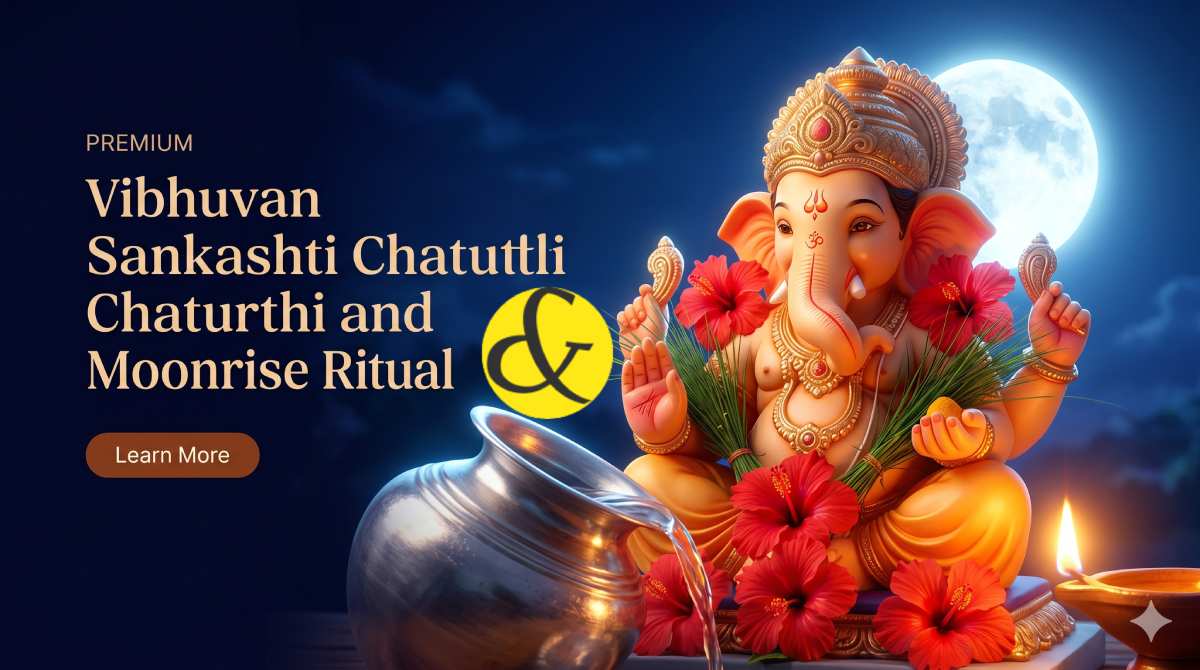
हिंदू पंचांग में कुछ ऐसे व्रत होते हैं जो चुपचाप आ जाते हैं, फिर भी मन को गहरी शांति और सुकून का एहसास कराते हैं। Vibhuvan Sankashti Chaturthi (विभुवन संकष्टी चतुर्थी) is one such sacred fasting day dedicated to Lord Ganesha. It is observed by devotees seeking stability in life, clarity of thought, and the ultimate power to overcome delays and confusion.
⏳ Date & Moonrise Timings (तिथि और चंद्रोदय का समय)
Vibhuvan Sankashti Chaturthi will be celebrated on Wednesday, June 3, 2026. According to the Hindu Panchang, this Vrat falls during the Krishna Paksha (waning phase of the moon). The fast is considered complete only after the sighting of the moon (Chandrodaya).
🌕 Moonrise Time (चंद्रोदय)
09:50 PM to 09:59 PM (IST)
*Varies slightly by city
🕒 Tithi Begins (प्रारंभ)
June 3, 2026 | ~ 09:21 PM
🛑 Tithi Ends (समाप्ति)
June 4, 2026 | ~ 11:30 PM
✨ Spiritual Significance (आध्यात्मिक महत्व)
Sankashti Chaturthi is deeply dedicated to Lord Ganesha, revered as *Vighnaharta* (the remover of obstacles) and the God of supreme wisdom. The word 'Sankashti' itself means deliverance from difficulties and emotional burdens.
Vibhuvan Sankashti holds special significance because it falls on the Krishna Paksha Chaturthi. In Vedic beliefs, the waning moon (घटता हुआ चंद्रमा) encourages inner contemplation rather than external noise. Many devotees spend this day engaged in deep prayers, Mantra chanting (मंत्र जाप), and meditative silence.
🪔 Pooja Vidhi & Offerings (पूजा विधि)
Devotees start their day early with a holy bath and taking a *Sankalp* (pledge) to observe the fast. While some observe a strict Nirjala Vrat (fasting without water), others consume fruits and Vrat-friendly foods (फलाहार).
Essential Offerings to Lord Ganesha:
- दूर्वा (Durva Grass): Highly beloved by Lord Ganesha, it symbolizes purity and resilience.
- मोदक या लड्डू (Modak or Ladoo): Offered as a sweet bhog for joy and prosperity.
- लाल फूल (Red Flowers): Usually Hibiscus, representing vibrant energy.
- धूप और दीया (Incense and Diya): For purifying the aura.
- फल और नारियल (Fruits and Coconut): Symbolizing holistic devotion.
During the Pooja, continuously chant: "Om Gam Ganapataye Namah" (ॐ गं गणपतये नमः).
🪐 Astrological Impact (ज्योतिषीय महत्व)
Calming the Moon & Enhancing Intellect
According to Vedic astrology, Sankashti Chaturthi is linked to calming mental restlessness (मानसिक बेचैनी). Lord Ganesha represents intellect (Budhi), while the Moon (Chandra) symbolizes emotions and mental balance.
Many astrologers believe that fasting on this day helps individuals facing repeated hurdles in their studies, career decisions, or personal plans. This Vrat brings mental stability (मानसिक स्थिरता) through devotion and consistency.
🌕 Moonrise Rituals (चंद्रोदय अनुष्ठान)
The soulful climax of Sankashti Chaturthi is the moonrise (चंद्रोदय). Unlike other fasts that end at sunset, this Vrat continues until devotees see the Moon. After spotting the Moon, devotees offer Arghya (अर्घ्य) using water, flowers, and rice. Only after this step is the fast traditionally broken (व्रत का पारण).
🙏 Best Practices for the Day (व्रत के नियम)
Devotees prefer to keep the day spiritually calm and disciplined. Common practices include:
- Visiting Ganesha Temples (गणेश मंदिरों के दर्शन)
- Refraining from harsh language and arguments (कठोर भाषा से बचना)
- Feeding the needy and poor (जरूरतमंदों को भोजन कराना)
- Observing a few hours of absolute silence (मौन व्रत)
🌟 Conclusion: Vibhuvan Sankashti Chaturthi is not just an act of ritualistic discipline. It is a profound opportunity to take out time for faith, express gratitude (कृतज्ञता), and connect with one's inner peace. May Lord Ganesha remove all your obstacles!